The Missing Link in ADHD Success: Nervous System Regulation
You can’t “strategise” your way out of a dysregulated nervous system.
In my experience so far, this is the foundation to understand and utilise for any successful ADHD success..
I see many high-achieving ADHD women who believe they’re failing at the basics.
But…
Their brain isn’t weak.
Their strategy isn’t wrong.
Their nervous system is overwhelmed.
In this post, I want to share the real missing link in ADHD success and why understanding your nervous system can be the difference between burnout and thriving.
Why the Nervous System Matters More Than We Were Ever Taught
Most ADHD content focuses on dopamine, executive function, or behaviour; extremely important pieces, of course but in my experience, they still rarely talk about the underlying system that drives all of it:
Your autonomic nervous system (ANS).
This is the part of your brain that governs:
Stress responses
- Emotional regulation
- Focus
- Energy
- Motivation
- Recovery
- Impulse control
You can be disciplined.
Organised.
Motivated.
Self-aware.
A total high achiever.
And still feel constantly overwhelmed because your nervous system is operating in survival mode rather than “safe and socially engaged” mode.
If you’ve ever wondered:
“Why do I shut down when I’m overwhelmed?”
“Why do I explode emotionally over small things?”
“Why can’t I get started when I want to?”
“Why do little tasks feel huge?”
“Why do I burnout so easily?”
This is… the reason.
Nervous system dysregulation is a biological design in which our nervous system kind of shuts down/slows down when overwhelmed to allow us to preserve energy for our survival and what our body deems as necessary for survival.
ADHD and the Stress Response: A Very Fast Rollercoaster
ADHD brains often spend more time in:
Hyperarousal (fight/flight)
Shutdown (freeze/fawn)
…than neurotypical brains do.
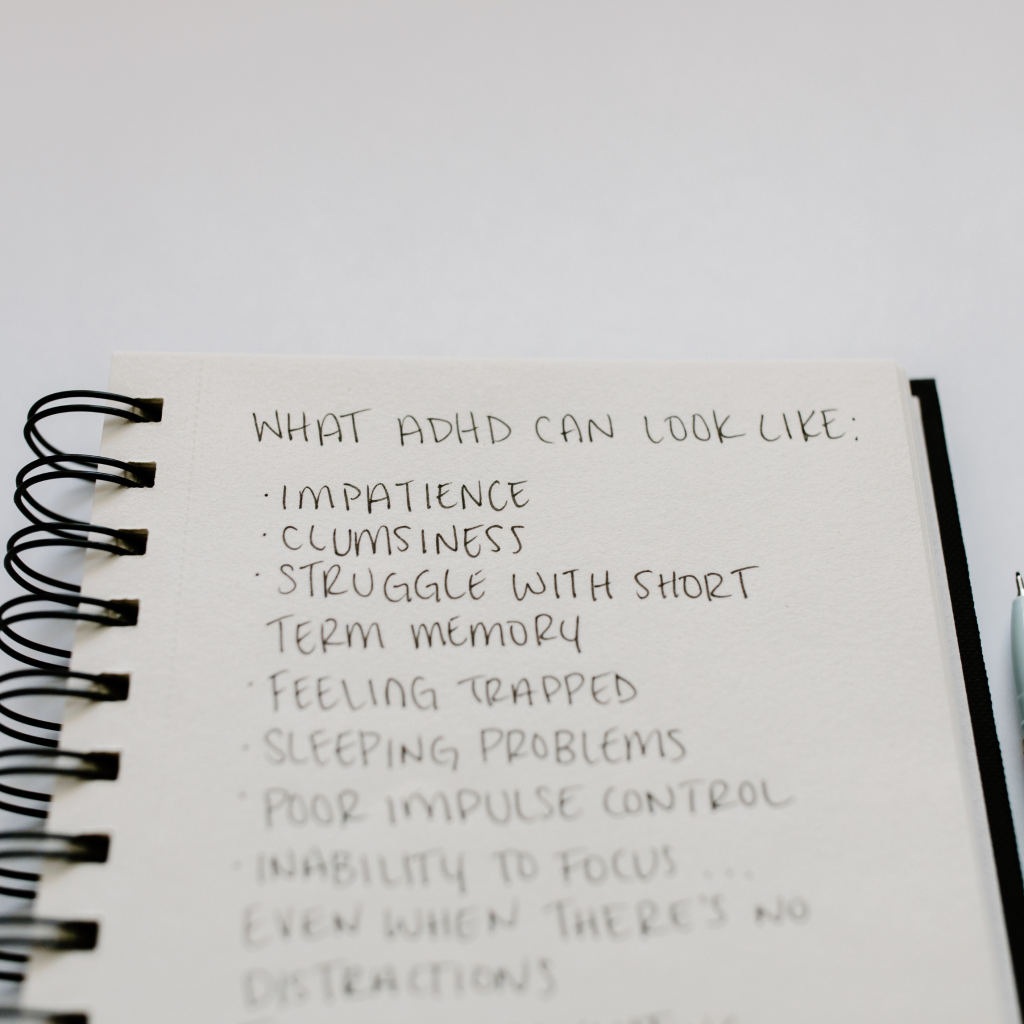
Common signs your nervous system is dysregulated:
Feeling “on edge” most of the day
Perfectionism that feels like a survival strategy
Trouble winding down at night (“wired but tired”)
Emotional “big waves”
Overthinking everything
Trouble initiating tasks even when you want to
Sensory overwhelm
Needing constant reassurance
Snapping or shutting down under pressure
Going from motivated → burnt out seemingly overnight
If you recognise yourself in these, you are far from alone.
In fact, this is textbook for many women with ADHD, especially high achievers who’ve spent years compensating.
Why Traditional ADHD Strategies Don’t Work When Your Nervous System Is Dysregulated
This helps understanding of why these imperatives that every ADHD-er gets told:
“Just start the task.”
“Use a planner.”
“Set reminders.”
“Break it down.”
“Try harder.”
“Be more disciplined.”
Are not so effective.
These are helpful only if the nervous system is regulated enough to access the thinking part of the brain.
In dysregulation, the prefrontal cortex; the home of planning, focus, prioritising, decision-making essentially goes offline.
Your system literally can’t do the thing.
This is why shame is such an unfair visitor.
You’re not failing to manage ADHD.
You’re trying to operate complex strategies while your brain is in survival mode.
Understanding Polyvagal Theory (Without the Jargon)
If you haven’t come across Polyvagal Theory yet, here’s the simplest explanation possible:
Your nervous system has three main states:
1. Ventral Vagal: “I’m safe enough to focus.”
Calm. Connected. Curious. Capable.
This is where executive function works.
2. Sympathetic: “I need to take action now!”
Fight/flight. Driven. Anxious. Urgent.
This can feel like ADHD hyperactivity or overwhelm.
3. Dorsal Vagal: “It’s all too much.”
Shutdown. Numb. Frozen.
This looks like procrastination, emotional withdrawal, or complete fatigue.
ADHD brains often bounce between sympathetic and dorsal, really fast.
So What Actually Helps? (The Part We’ve Been Missing)
When I first heard about the polyvagal theory, it all made sense both from my experience and from the many consultations I have heard and witnessed. Like many, I initially assumed that nervous system regulation is about becoming calm and zen all the time, but it isn’t
It’s actually about teaching your brain:
- how to recognise its state
- how to shift gently
- how to return to safety
- how to strengthen its “window of tolerance”
Not just this, but these practices are simple, small, daily, compassionate practices, not big complex interventions.
And lastly but not least important, for ADHD women, the right practices must be movement-based, sensory-friendly, and grounding, because stillness-based meditation often backfires.
Five ADHD-Friendly Nervous System Regulation Tools
1. Micro-regulation (30–90 seconds)
The ADHD brain responds best to small, frequent regulation rather than long sessions.
For example:
- Hand on chest + slow exhale
- Sensory grounding (cold water, textured object)
- Five deep breaths with long exhales
- Standing stretch + shoulder roll
- Looking out a window for 10 seconds
These tiny resets change your entire day.
2. Movement that matches your state
Regulation is not just quiet meditation.
It’s: What does my nervous system need right now?
If you’re wired → use calming movement (walking, stretching, rhythmic movement).
If you’re shut down → use activating movement (shaking arms, brisk walk, music-driven movement).
The movement element is essential for ADHD because it helps process adrenaline and resets dopamine levels.
3. Co-regulation (the one no one teaches)
Humans regulate through connection:
- talking
- body doubling
- being near someone safe
- gentle eye contact
- voice tone (soothing, predictable)
ADHDers often try to regulate alone.
But co-regulation is a biological need, not a weakness.
4. Sensory nourishment
Your sensory system shapes your emotional state.
Ask yourself:
- What sounds calm or overstimulate me?
- Which textures soothe me?
- What lighting helps me focus?
- Do I need more stimulation or less?
Simple sensory adjustments can dramatically change your functioning.
A daily “nervous system anchor”
This is one non-negotiable habit that signals safety, a kind of ritual cue.
Examples:
- Morning sunlight
- Three deep breaths before opening your laptop
- A calming playlist
- A 1-minute stretch before bed
Pick one and repeat it daily.
Watch how your stress threshold changes.
How This Links to ADHD Coaching
Most women with ADHD come to coaching expecting:
- organisation strategies
- productivity systems
- goal-setting
- routines
And yes, we absolutely do those.
But none of it sticks without nervous system regulation.
A regulated nervous system makes ADHD strategies actually work.
This is why coaching feels transformational for so many women, not because they suddenly become more disciplined, but because they learn to work with their biology, not against it.
The Bottom Line: You’re Overloaded, not Broken.
If you take nothing else away from this, let it be this:
You don’t have a motivation problem, you have a nervous system that’s been running on overdrive for far too long.
Success with ADHD isn’t about being calmer, more organised, more consistent, or more disciplined, it’s about creating a life where your nervous system feels safe enough to let those skills come online.
Your nervous system is not an obstacle.
It’s the map.
And once you understand it, everything else gets lighter.
If you want more gentle, science-backed support, feel free to come connect with me on Linkedin for more simple tools for ADHD women who want to feel less frazzled and more themselves.