Why Productivity Without Alignment Burns Out High-Achieving ADHD Women
(And What Works Instead)
When “having it all” still feels empty
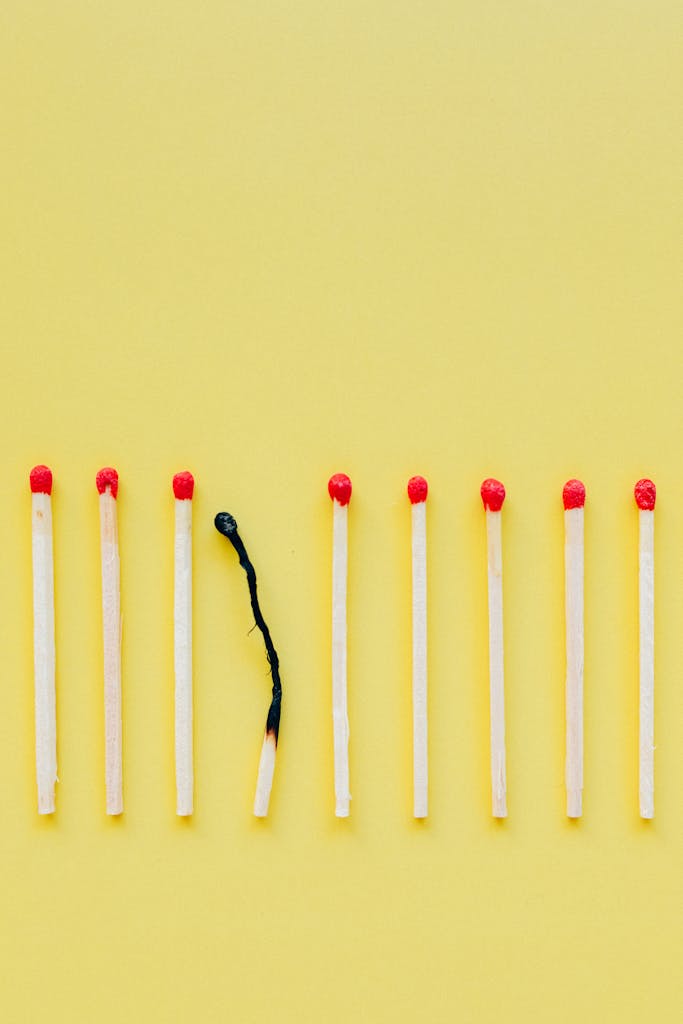
You’re supposedly doing everything right. A fantastic career, ambitious goals, crisp to-do lists, planners galore. On paper: success. In reality: you’re exhausted, invisible inside your own accomplishments, and wondering why the sense of being enough keeps slipping through your fingers.
If you’re a high-achieving woman with ADHD, You don’t have to fit the system to be brilliant and chasing productivity alone isn’t the answer. In fact, it may be the reason you keep burning out.
The Problem: Productivity as the default virtue
Most of our culture says: “Work harder. Be more efficient. Use systems. Get it done.” We applaud the person who ticks every box, who races to the finish line, who shows up early and stays late.
For many neurotypical brains that formula works (mostly). But your ADHD-brain? It doesn’t run on the same fuel. It has different wiring. Yet you’ve been plugging it into a system built for someone else. That mismatch shows up as:
endless “optimised productivity” with little joy
creative surges followed by collapse
ticking off tasks without feeling fulfilled
more resistance the closer you get to your own goals
It may feel like what you’re experiencing is a failure, I say it’s actually a mis-fit.
What Research Tells Us About High-Achieving ADHD Women
It’s clear to see how this creates a perfect storm: your strengths (creativity, hyperfocus, flair) + your structure (or lack thereof) + the world’s demand (productivity, perfectionism) = burnout risk.
Traditional productivity tools assume consistent attention, linear execution, predictable output. That’s rarely how your brain works. So you end up:
trying technique after technique
constantly refining the system
measuring success in hours or outputs instead of alignment
And yet feeling worse, not better.
What “Alignment” Actually Means
“If you’re optimising a broken system, you will still burn out, just more efficiently.”
– Doctor Liz
By alignment, I mean building your life and work around how your brain actually works, not against it.
For women with ADHD, this means:
honouring energy cycles instead of fighting them
designing systems that lean into your wiring (interest-driven, high novelty, bold)
valuing rest and regulation equally to ‘output’
shifting from “I must perform” → “I must design for me”
When alignment becomes the goal instead of productivity per se, everything shifts: your metrics change, your meaning changes, your experience changes.
The Six “Rebellious Truths” (anchoring your design)
Here’s how this plays out in your high-achiever ADHD life:
1: Productivity Isn’t the Goal, Alignment Is
Stop chasing “filling the hours” and start filling what matters.
Action: ask: Does this task reflect my values and my brain’s rhythm? If no, have courage to tweak it.
2: ADHD Is Untapped Energy, Not a Disorder
Your wiring isn’t a bug — it’s a feature.
Action: map your strengths (e.g., rapid insight, curiosity, intensity) and align them to roles/projects that honour them.
3: Design Is Everything (Discipline Is Overrated)
Systems win, willpower doesn’t.
Action: build your day around your energy highs (e.g., creative bursts) and lows (e.g., planning, buffer time).
4: Perfectionism Is the Real Procrastination
Chasing perfection is a trap.
Action: set minimal viable execution thresholds. Reframe “Good enough” as being strategic not being mediocre.
5: Balance Is Boring, Integration Is Power
The “equal partition” model doesn’t fit ADHD brains.
Action: create a rhythm where work, rest, play flow in cycles. For example: sprint → recharge → reflect → sprint.
Pick one system you’ll actually use (you don’t need 500).
Example: “25-minute sprint, 5-minute reset” – especially good for ADHD attention cycles.
At the end of the week, review: what worked? What didn’t? Adapt.
Replace Perfectionism With Momentum
Choose progress over perfect.
Set a timer: 25 minutes on a task, then stop and ask: did I get the needle moving?
Celebrate that movement, however small.
Regulate Your Nervous System
Use micro-breaks (walking, breathing, sensory reset).
Recognise tension building: when you feel that tightening in chest/shoulders, pause.
Build “buffer rituals” between major life domains (e.g., work → home transition).
Re-Frame Success
Traditional: “I will prove I’m good by output.”
Aligned: “I will show I’m good by designing for my brain, doing meaningful work, and honouring rest.”
Ask yourself weekly: Does this feel like success for me, or success for someone else’s system?
Personal Reflection
I’ve seen women who build incredible careers, climbing ladders who live in a constant state of rescue mode. Their ADHD brain was succeeding in spite of the system, and that’s exhausting. The moment they stopped trying to fit and started trying to flow, everything changed. Their output didn’t necessarily explode (though sometimes it did!), what changed was the experience.
Not being at war with your brain is an underrated victory.
– Doctor Liz
Pick ONE of the truths above. Commit to one tiny experiment this week:
If you pick “Design Is Everything”: try a 15-minute sprint with a timer and reward after.
If you pick “Success Needs a Nervous System”: schedule a 10 minute buffer at the end of your day for grounding and reflection.
At the end of the week, ask: How did this feel? More drained? More alive? More aligned?
Repeat. Iterate. Your brain rewires through repeated experience, not just intention.
When you stop trying to fit into a system built for someone else’s wiring, you make space for brilliance to breathe. You stop proving and start designing. You stop grinding and start thriving. That’s not just productivity. That’s purpose. That’s success upside-down.
Sign up here for my weekly supportive email with tips, tools, and real-talk to champion you on your ADHD high-achiever journey.
Balance is a lovely idea, it’s just not for the ADHD brain. And if you’ve spent years chasing it, blaming yourself for never quite achieving it, the reality is: You’re not failing at balance.Balance is failing you. Balance, at least the way the world defines it, assumes predictable focus, consistent motivation, stable energy, and an…
Forcing yourself into colour-coded planners, rigid morning routines, or “just trying to stick to the plan” strategies… you already know how this ends. A strong start. A steep crash. A quiet sense of shame you don’t talk about. Traditional productivity systems were never built for the ADHD brain. Let me show you why they fail,…
You’ve been told your entire life that you’re impulsive. That you jump into decisions too quickly. That you need to slow down and think things through more carefully. So you’ve tried. You’ve forced yourself to analyze every option, consider every angle, delay decisions until you feel certain. And it’s exhausting. The overthinking drains you. The…
Adult ADHD is often misunderstood, especially in the UK, where awareness has only recently started catching up. Many adults live with silent struggles and challenges that don’t fit the typical ADHD stereotype but can deeply affect daily life, relationships, and wellbeing. I want to shed light on these hidden difficulties so you can understand why…
If you’re a high-achieving ADHD woman, perfectionism probably shows up in ways you don’t even notice: You tweak emails endlessly. You postpone launching projects because they’re “not ready.” You feel exhausted, guilty, or frustrated with yourself. To the outside world, it looks like high standards. Perfectionism isn’t ambition, it’s actually fear; fear of mistakes, judgment,…
Exercise isn’t just about getting fit or losing weight when you have ADHD. It’s about giving your brain what it desperately needs to function better. Among my clients and patients, the ones who move their bodies consistently are the ones who manage their symptoms better. They focus more easily, regulate their emotions more effectively, and…